
Finding Your Clear Skin Path: A Real-World Guide to Acne Treatment in the US
Struggling with acne can feel overwhelming. If you’ve searched "best acne treatment" or "how to get rid of acne," you’ve likely found endless, confusing advice. This guide cuts through the noise. We’ll walk through the proven options—from over-the-counter products to dermatologist care—to help you find the right acne solution for your skin and budget.

1. First, Identify Your Acne Type

Effective treatment starts with understanding what you're dealing with. Misdiagnosing your acne can lead to using the wrong products and frustration. Here are the most common types users search for:


Acne Type Key Characteristics Common Search Terms
Comedonal Acne Blackheads and whiteheads. Pores are clogged but not inflamed. how to get rid of blackheadswhitehead treatment
Inflammatory Acne Red, swollen papules and pustules (pimples). red acne treatmenthow to treat painful pimples
Cystic Acne Deep, painful, large lumps beneath the skin. Can lead to scarring. cystic acne treatmentdeep acne treatment
Hormonal Acne Often appears along jawline and chin. Linked to menstrual cycle, PCOS, or stress. hormonal acne treatmentadult acne treatment

Self-Assessment Tip: Take a clear photo of your skin in good lighting. Track where breakouts occur over a few weeks. This information is incredibly valuable, whether you're choosing a product online or consulting a dermatologist.

2. The Treatment Ladder: From Drugstore to Dermatologist

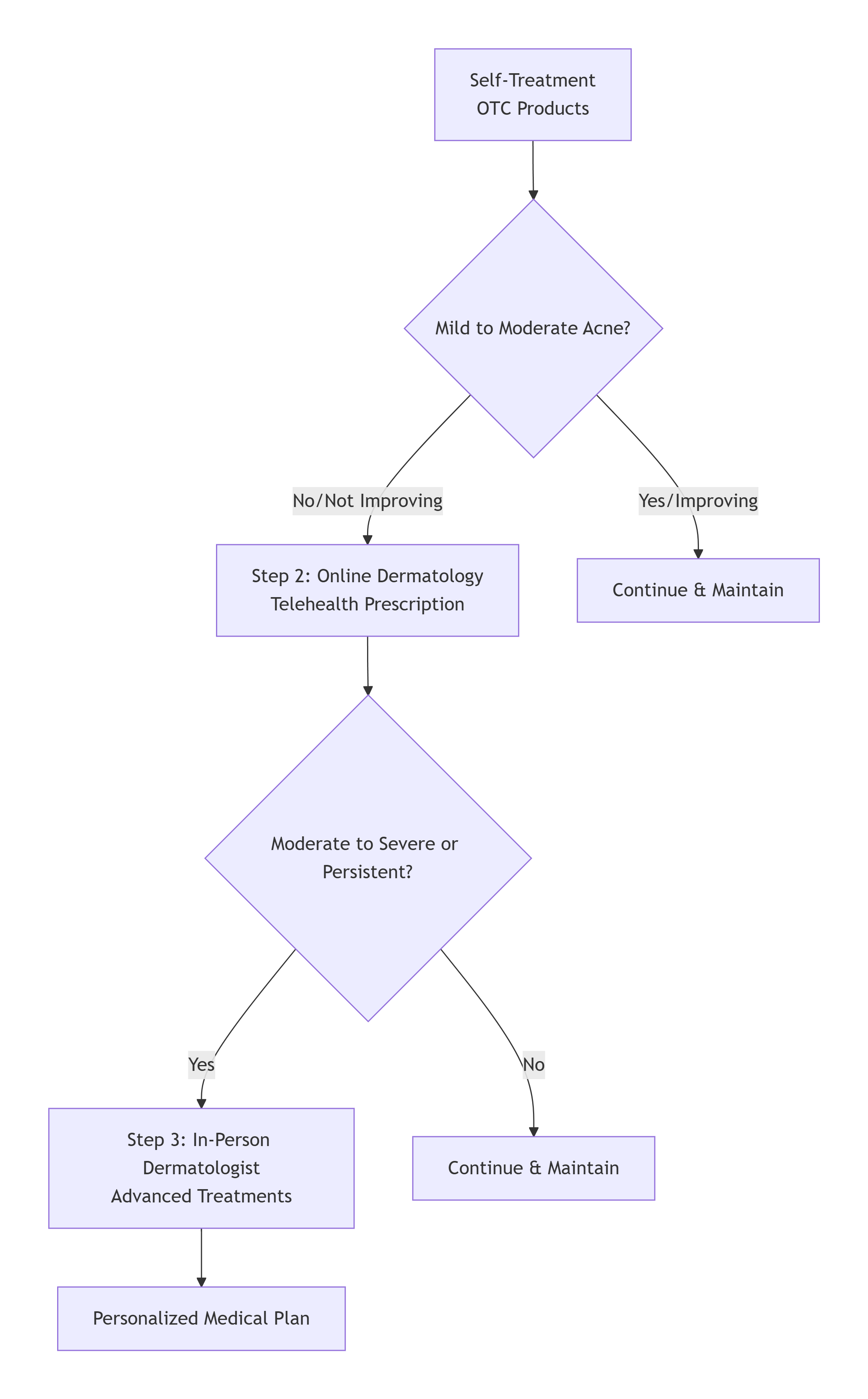
Think of acne treatment as a ladder. Start at the step that matches your acne's severity. You can always step up if needed.
Step 1: Over-the-Counter (OTC) Powerhouses

For mild acne, OTC products with these key ingredients are the first line of defense. Look for these active ingredients on labels:

  • Salicylic Acid: Best for blackheads and whiteheads. It exfoliates inside the pore. (Search: salicylic acid acne)

  • Benzoyl Peroxide: Kills acne-causing bacteria and reduces inflammation. Great for red, inflamed pimples. Start with a lower concentration (2.5-5%) to minimize dryness. (Search: benzoyl peroxide wash)

  • Adapalene Gel (Differin): A retinoid now available OTC. It prevents clogged pores and is a gold standard for persistent acne. Requires patience (can take 8-12 weeks). (Search: differin gel results)

Case Example: Mark, a college student with occasional breakouts, started using a benzoyl peroxide face wash and a lightweight salicylic acid moisturizer. Within 4 weeks, his inflammatory acne significantly reduced.

Step 2: The Rise of Online Dermatology & Prescription Care

If OTC products aren't enough after 2-3 months, or you suspect hormonal acne, consider telehealth. Services like Curology, Apostrophe, and Hers connect you with licensed dermatologists for a custom online acne prescription.

  • How it Works: You complete an online consultation and upload photos. A provider creates a personalized formula (often combining ingredients like tretinoinclindamycin, and azelaic acid).

  • Good For: Moderate acne, busy schedules, and those seeking prescription-strength treatment without an immediate in-person visit.

  • Cost: Typically a monthly subscription fee, which includes the custom medication and provider access. More affordable than many in-person copays for uninsured individuals.

Step 3: In-Person Dermatologist Care

For severe, cystic, or scarring acne, or if treatments fail, an acne dermatologist near me is the best choice. They offer powerful tools:

  • Oral Medications: Antibiotics for short-term inflammation control or isotretinoin (Accutane) for severe, resistant cystic acne. (Search: accutane for severe acne - Note: This is a heavily monitored prescription).

  • In-Office Procedures: Chemical peelscortisone injections (for rapid cyst reduction), and laser treatments can accelerate results and treat scarring.

  • Comprehensive Management: They diagnose underlying causes (like hormonal imbalances) and create a long-term acne management plan.

3. Building Your Routine & Managing Expectations

No matter the treatment, consistency is key.

  1. Keep it Simple: Cleanse → Treat → Moisturize → Sunscreen (AM). Overloading your skin with products can worsen acne.

  2. Give it Time: Most treatments require 6-12 weeks to show significant improvement. Don't give up after two weeks.

  3. Beware of "Purging": When starting retinoids (like adapalene, tretinoin), your skin may worsen for a few weeks as it accelerates cell turnover. This is usually temporary.

  4. Don't Pick! Picking spreads bacteria and dramatically increases the risk of acne scars.

4. Navigating Cost & Insurance

  • OTC Products: Range from budget-friendly to high-end. You often don't need the most expensive option; focus on the active ingredient list.

  • Telehealth Subscriptions: Fixed monthly or quarterly costs. Often not covered by insurance but can be cost-effective.

  • Dermatologist Visits: Costs vary by insurance plan (copay, deductible). Many insurers cover visits and prescriptions for diagnosed acne, but prior authorization may be needed for certain medications. Always check your coverage.

Final Takeaway: Treating acne is a journey, not a quick fix. Start by accurately identifying your acne type, begin with targeted OTC treatments, and don't hesitate to seek professional help from an online dermatologist or in-person acne specialist if needed. With the right, consistent approach, clear skin is an achievable goal.

Disclaimer: This article is for informational purposes only and does not constitute medical advice. Always consult with a licensed dermatologist or healthcare provider before starting any new treatment for acne, especially prescription medications.

Trending Now
lifestyle | 2026-02-03 17:28:19
Finding Your Clear Skin Path: A Real-World Guide to Acne Treatment in the US
Struggling with acne can feel overwhelming. If you’ve searched "best acne treatment" or "how to get rid of acne," you’ve likely found endless, confusing advice. This guide cuts through the noise. We’ll walk through the proven options—from over-the-counter products to dermatologist care—to help you find the right acne solution for your skin and budget.

1. First, Identify Your Acne Type

Effective treatment starts with understanding what you're dealing with. Misdiagnosing your acne can lead to using the wrong products and frustration. Here are the most common types users search for:


Acne Type Key Characteristics Common Search Terms
Comedonal Acne Blackheads and whiteheads. Pores are clogged but not inflamed. how to get rid of blackheadswhitehead treatment
Inflammatory Acne Red, swollen papules and pustules (pimples). red acne treatmenthow to treat painful pimples
Cystic Acne Deep, painful, large lumps beneath the skin. Can lead to scarring. cystic acne treatmentdeep acne treatment
Hormonal Acne Often appears along jawline and chin. Linked to menstrual cycle, PCOS, or stress. hormonal acne treatmentadult acne treatment

Self-Assessment Tip: Take a clear photo of your skin in good lighting. Track where breakouts occur over a few weeks. This information is incredibly valuable, whether you're choosing a product online or consulting a dermatologist.

2. The Treatment Ladder: From Drugstore to Dermatologist

Think of acne treatment as a ladder. Start at the step that matches your acne's severity. You can always step up if needed.

Step 1: Over-the-Counter (OTC) Powerhouses

For mild acne, OTC products with these key ingredients are the first line of defense. Look for these active ingredients on labels:

  • Salicylic Acid: Best for blackheads and whiteheads. It exfoliates inside the pore. (Search: salicylic acid acne)

  • Benzoyl Peroxide: Kills acne-causing bacteria and reduces inflammation. Great for red, inflamed pimples. Start with a lower concentration (2.5-5%) to minimize dryness. (Search: benzoyl peroxide wash)

  • Adapalene Gel (Differin): A retinoid now available OTC. It prevents clogged pores and is a gold standard for persistent acne. Requires patience (can take 8-12 weeks). (Search: differin gel results)

Case Example: Mark, a college student with occasional breakouts, started using a benzoyl peroxide face wash and a lightweight salicylic acid moisturizer. Within 4 weeks, his inflammatory acne significantly reduced.

Step 2: The Rise of Online Dermatology & Prescription Care

If OTC products aren't enough after 2-3 months, or you suspect hormonal acne, consider telehealth. Services like Curology, Apostrophe, and Hers connect you with licensed dermatologists for a custom online acne prescription.

  • How it Works: You complete an online consultation and upload photos. A provider creates a personalized formula (often combining ingredients like tretinoinclindamycin, and azelaic acid).

  • Good For: Moderate acne, busy schedules, and those seeking prescription-strength treatment without an immediate in-person visit.

  • Cost: Typically a monthly subscription fee, which includes the custom medication and provider access. More affordable than many in-person copays for uninsured individuals.

Step 3: In-Person Dermatologist Care

For severe, cystic, or scarring acne, or if treatments fail, an acne dermatologist near me is the best choice. They offer powerful tools:

  • Oral Medications: Antibiotics for short-term inflammation control or isotretinoin (Accutane) for severe, resistant cystic acne. (Search: accutane for severe acne - Note: This is a heavily monitored prescription).

  • In-Office Procedures: Chemical peelscortisone injections (for rapid cyst reduction), and laser treatments can accelerate results and treat scarring.

  • Comprehensive Management: They diagnose underlying causes (like hormonal imbalances) and create a long-term acne management plan.

3. Building Your Routine & Managing Expectations

No matter the treatment, consistency is key.

  1. Keep it Simple: Cleanse → Treat → Moisturize → Sunscreen (AM). Overloading your skin with products can worsen acne.

  2. Give it Time: Most treatments require 6-12 weeks to show significant improvement. Don't give up after two weeks.

  3. Beware of "Purging": When starting retinoids (like adapalene, tretinoin), your skin may worsen for a few weeks as it accelerates cell turnover. This is usually temporary.

  4. Don't Pick! Picking spreads bacteria and dramatically increases the risk of acne scars.

4. Navigating Cost & Insurance

  • OTC Products: Range from budget-friendly to high-end. You often don't need the most expensive option; focus on the active ingredient list.

  • Telehealth Subscriptions: Fixed monthly or quarterly costs. Often not covered by insurance but can be cost-effective.

  • Dermatologist Visits: Costs vary by insurance plan (copay, deductible). Many insurers cover visits and prescriptions for diagnosed acne, but prior authorization may be needed for certain medications. Always check your coverage.

Final Takeaway: Treating acne is a journey, not a quick fix. Start by accurately identifying your acne type, begin with targeted OTC treatments, and don't hesitate to seek professional help from an online dermatologist or in-person acne specialist if needed. With the right, consistent approach, clear skin is an achievable goal.

Disclaimer: This article is for informational purposes only and does not constitute medical advice. Always consult with a licensed dermatologist or healthcare provider before starting any new treatment for acne, especially prescription medications.

Trending Now